How to Identify Which Goals Deserve Your Best Morning Hours (3 Tests)
I spent three years starting every workday by answering emails, tweaking my calendar, and reviewing yesterday's to-do list. It felt productive. It felt orderly. It was also a quiet disaster—I was feeding my best mental energy to tasks that basically anyone could do at 4 PM while half-asleep. The goals that actually mattered—the book outline, the client proposal that could double my revenue, the skill-building project—got whatever foggy leftovers my brain had after ninety minutes of clerical busywork.
That's when I started asking a simple question: How do you identify which goals actually deserve your best morning hours? Not your first hours. Not your available hours. Your best ones—that narrow window where your mind is sharpest, your willpower is highest, and interruptions haven't yet piled up. After a lot of trial and error (and a few spectacularly wasted mornings), I landed on three tests that filter the wheat from the chaff. They've never let me down since.
Why Your Morning Hours Aren't Just 'Busy' — They're a Strategic Asset
Here's the uncomfortable truth most productivity advice sidesteps: your morning energy is a finite, high-octane resource. Studies on circadian rhythms—the kind reported in chronobiology journals—show that for roughly 70% of people, cognitive performance peaks within two to four hours after waking. That's not a nice-to-have window. It's your biological prime time. Treating it like any other block of the day is like using vintage champagne to wash dishes.
When I started tracking my own output, I noticed something stark: a single focused morning hour on a high-leverage goal produced more value than three scattered afternoon hours on the same task. The difference wasn't discipline or skill—it was timing. My brain simply worked better early. Yet I was squandering that advantage on tasks that didn't compound, didn't require peak cognition, and didn't unlock anything else.
This is the moment where most people nod along and then keep doing the same thing tomorrow. To actually change the pattern, you need a decision framework—something that makes the choice automatic, not a daily debate. That's what these three tests provide. They're not theoretical. I've used them on my own goals, on client projects, and with friends who asked, "How do you decide what to work on first?"
Test #1: The 'Long-Term Leverage' Test — Does This Goal Keep Paying Off?
The first filter is brutally simple: If I do this goal for one hour today, will it produce returns tomorrow, next week, or next year without additional effort?
Think of it like a financial investment. Some tasks pay you once—then you're done. Others create assets that keep earning. Writing a blog post that ranks on Google for years? That's compounding. Building a relationship with a key industry contact? That's compounding. Learning a skill like SQL or public speaking? That's compounding. Answering a routine email from a vendor? That's a one-time payout.
I keep a small whiteboard next to my desk with two columns: "Compound" and "Consume." Every morning, before I open anything else, I ask: Which goal on my list is the best compounder? That goal gets the first slot, no questions asked.
Here's a concrete example from my own life. Last year, I was torn between two goals: (A) finalize a new online course outline, and (B) reorganize my file storage system. Goal A—if done well—could generate passive income and teach a skill that would help future projects. Goal B would make me feel organized for about a week, then become invisible. Goal A passed the leverage test. Goal B failed. I did Goal A first, and that outline eventually became a product that's earned more in six months than my file reorganization would have saved in a decade.
Your litmus: Look at each goal on your list. If you could only do one of them today, which one would still be working for you a month from now? That's your morning candidate. Everything else can wait.
Test #2: The 'Energy-Sensitive' Test — Would This Goal Suffer If You Did It at 3 PM?
Not all goals are created equal when it comes to energy requirements. Some tasks are delicate—they demand your sharpest focus, your creative spark, or a reservoir of willpower. Other tasks are practically indestructible—you can do them with a headache, after a bad lunch, or while half-watching a webinar.

Here's the second test: Would this goal's quality noticeably drop if you attempted it during your daily energy slump?
If the answer is yes—if writing a strategic report at 3 PM produces worse thinking than writing it at 8 AM—then that goal is energy-sensitive and belongs in your morning block. If the answer is no—if sorting expenses or scheduling meetings feels roughly the same at any hour—then it's energy-agnostic and can be pushed to later.
Daniel Pink's research in When backs this up with real data: our cognitive abilities follow a predictable pattern over the day, with analytical tasks peaking in the morning for most people, and insight-based tasks often benefiting from a slightly later window. But the key insight is that not everything requires peak cognition. The trick is to match the task's sensitivity to your energy curve.
I once made the mistake of scheduling a difficult client negotiation—a goal that required sharp reasoning and emotional regulation—at 2 PM. I had a heavy lunch, the room was warm, and I felt sluggish. The negotiation went poorly. I compromised on points I shouldn't have. That was a pure energy-sensitivity failure. Now, any high-stakes communication or creative work gets the morning slot. Low-stakes admin gets the afternoon.
Your litmus: Imagine doing this goal right after a heavy lunch. If the thought makes you cringe, it belongs in the morning. If you shrug, it can wait.
Test #3: The 'Pivot Point' Test — Does This Goal Unlock Everything Else?
Some goals are keystones. They don't just produce their own value—they make every other goal easier, faster, or even unnecessary. Charles Duhigg popularized the concept of "keystone habits" in The Power of Habit, and the same logic applies to individual goals. A pivot-point goal is one that, once completed, creates a domino effect across your entire day or week.
The third test is: Does completing this goal remove a bottleneck, provide critical information, or simplify other tasks on your list?
Here's a real scenario from a friend who runs a small design agency. She was torn between two morning options: (A) sketch out the concept for a new client's branding, and (B) respond to a few routine client emails. The sketches were creative work—energy-sensitive, sure—but they also served as a pivot point. Once she had the concept, she could brief her team, get feedback, and move the entire project forward. The emails, by contrast, only cleared her inbox. The concept unlocked the week. The emails just cleared space. She chose the concept every time.
I use a simple mental model for this: if I could only complete one goal today, which one would make the rest of my day feel more productive? That's the pivot point. It's not always the most obvious goal—sometimes it's a short phone call that unblocks a collaborator, or a quick decision that lets you stop worrying and start executing.
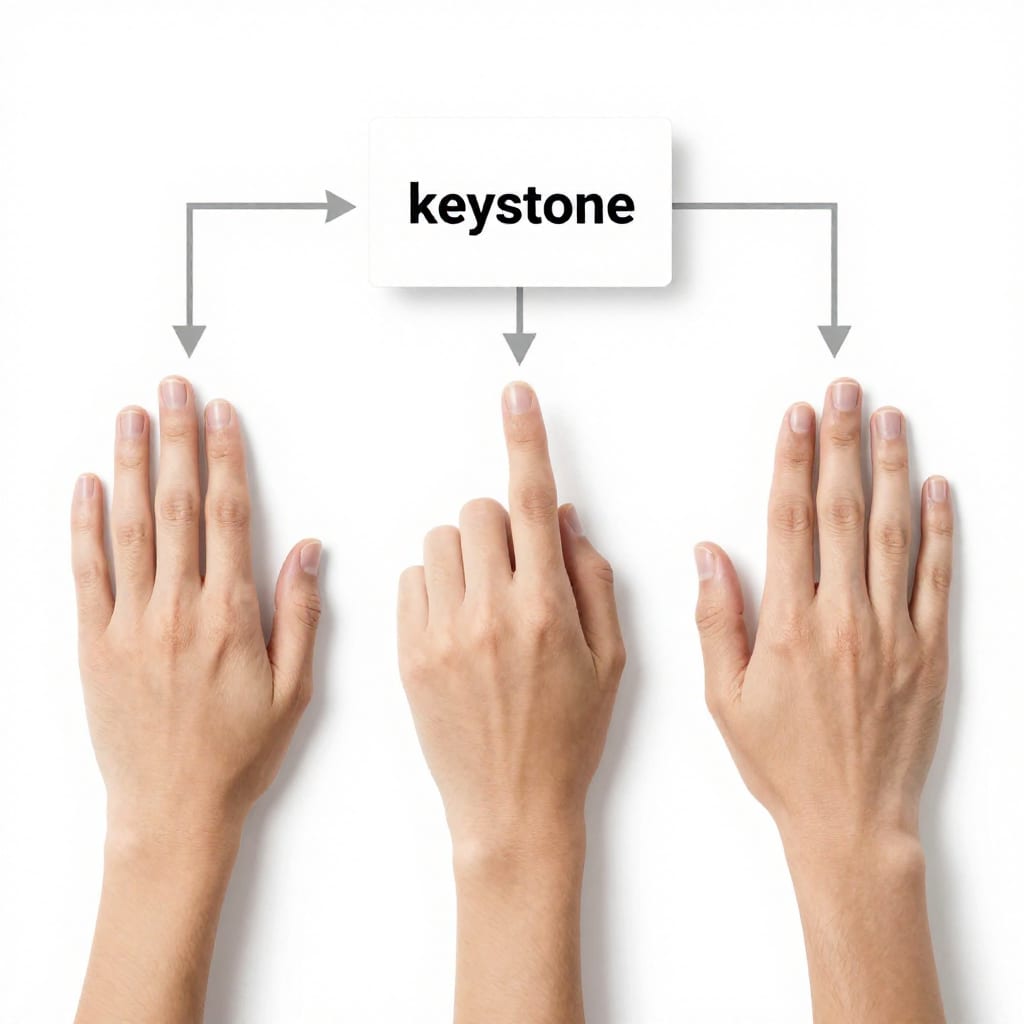
Your litmus: Ask yourself: If I do this goal first, will the next few tasks feel easier or faster? If yes, it's a pivot point. If no, it's a standalone goal that can wait.
Putting the Three Tests Together: Your Morning Priority Scorecard
Three tests are useful individually, but they're powerful when combined. Here's the simple scoring system I use every evening to plan the next morning:
- Test #1 (Leverage): Does this goal create compounding returns? Score 1 point if yes, 0 if no.
- Test #2 (Energy Sensitivity): Would this goal suffer at 3 PM? Score 1 point if yes, 0 if no.
- Test #3 (Pivot Point): Does this goal unlock other goals? Score 1 point if yes, 0 if no.
A goal that scores 3/3 is an absolute morning anchor. A 2/3 is a strong candidate, especially if the missing test is #3 (pivot point). A 1/3 or 0/3 belongs in the afternoon or evening. I've found that only one goal per morning should anchor your first 90 minutes—trying to slot multiple 3/3 goals leads to fragmentation and diminishing returns.
Here's a real-world example from last week. I had three goals: (A) draft a chapter for a book I'm co-authoring, (B) update my expense spreadsheet for tax season, and (C) record a short video for a client. Drafting the chapter scored 3/3—it compounds (will be in the book forever), it's energy-sensitive (writing at 3 PM is terrible), and it's a pivot point (once drafted, I can share with my co-author and move forward). The expense spreadsheet scored 0/3—no compounding, no energy sensitivity, no unlocking. The video scored 2/3—it's somewhat energy-sensitive (talking on camera requires presence), but it doesn't compound much and doesn't unlock other tasks. The chapter won, and I finished it by 10 AM.
This system works because it removes the emotional weight of choosing. You're not guessing. You're applying a consistent filter, and the filter makes the decision for you.
Frequently Asked Questions
What if I have multiple goals that pass all three tests?
Rank them by the highest combined score, or rotate them weekly—but only one goal should anchor your first 90 minutes. Spreading your best energy across two or three high-leverage goals often means none of them get the deep focus they deserve. Pick one, commit, and let the others wait for tomorrow.
Should I include routine maintenance tasks (like email) in my morning block?
Rarely. Email almost always fails Test #2 (it's not energy-sensitive) and Test #1 (it rarely compounds). Batch it later in the day. I schedule email processing for 11 AM or 2 PM, and my morning stays clear for goals that matter.
What if my peak energy isn't in the morning due to chronotype?
Adapt the tests to your personal peak window. If you're a night owl who hits peak focus at 8 PM, then your "morning" is actually your evening. The principle is about your best hours, not clock time. Apply the same three tests to whatever block of time is your biological prime.
Can a goal that fails all three tests ever be done in the morning?
Only if it's a non-negotiable deadline or a habit you're trying to build—but ideally, schedule it elsewhere. If you're building a new habit (like daily journaling), it may be worth doing in the morning for consistency, even if it fails the tests. But for most goals, the tests are a reliable guide.
How often should I re-evaluate which goals pass these tests?
Monthly. Goals change in leverage and energy sensitivity as projects evolve. A goal that was a pivot point last month might become a routine task this month. I do a quick review on the last Sunday of each month, scoring my top five goals and adjusting my morning block accordingly.
Practical takeaway: Your morning hours are not just early—they're optimal. Guard them like a scarce resource. Apply the three tests (Leverage, Energy Sensitivity, Pivot Point) to every goal on your list, and only the ones that score high get your first 90 minutes. This one shift—choosing what to do with your best energy—has changed my productivity more than any app, system, or planner ever could. It's worth bookmarking this page to reference when you're setting up your next week.