Best Journaling Prompts for Reviewing Your Week: 5 That Changed My Life
I spent years treating my weekly review like a chore—sitting down every Sunday evening, staring at a blank page, and writing the same vague sentences: “This week was busy. I need to be more productive. I’ll do better next week.” It felt like productivity theater, not progress. Then I discovered five journaling prompts that completely rewired how I process my weeks. These aren’t fluffy questions you’ll find on a self-care blog. They’re sharp, slightly uncomfortable, and they’ve genuinely changed my life—one answer at a time. Here are the best journaling prompts for reviewing your week that actually deliver.
The One Prompt That Broke My Overthinking Habit
For years, my Sunday evenings were a loop of anxiety: replaying conversations, second-guessing decisions, mentally listing everything I hadn’t done. I’d end up more stressed than when I started. Then I read about a simple prompt from a therapist’s blog: “What is one thought I had this week that I can now let go of?”
The first time I answered it, I wrote about a colleague’s offhand comment that had been gnawing at me for three days. Naming it—and giving myself permission to release it—felt like unhooking a heavy backpack. The prompt forces you to distinguish between useful reflection and rumination. Over the next few weeks, I noticed my Sunday anxiety dropped by half. I wasn’t ignoring problems; I was choosing which ones deserved my energy.
This prompt works because it’s specific and final. You don’t just list worries—you actively decide to release one. It’s the mental equivalent of clearing your browser history. If you struggle with overthinking, start here. It’s the gateway prompt.
Prompt #2: The ‘Three Wins’ Frame That Built My Confidence
I used to end every week focusing on what went wrong. My weekly review was a catalog of failures: the meeting I botched, the email I forgot, the workout I skipped. It drained my motivation. Then I flipped the script with a prompt I borrowed from a performance coach: “Name three wins from this week—no matter how small.”
At first, I struggled. My wins felt trivial: “I replied to that email quickly.” “I didn’t yell at my kids this morning.” But the act of writing them down changed my brain’s reward system. Within a month, I started looking for wins during the week—not just after. I’d catch myself thinking, “This is going in my three wins.” It sounds cheesy, but it built genuine confidence. By week six, I had a list of concrete achievements I could refer back to during tough weeks.
The key is to be honest, not grandiose. A win can be as small as drinking enough water or finally booking that dentist appointment. Over time, these small wins compound into a solid sense of self-efficacy. It’s the anti-imposter-syndrome prompt.
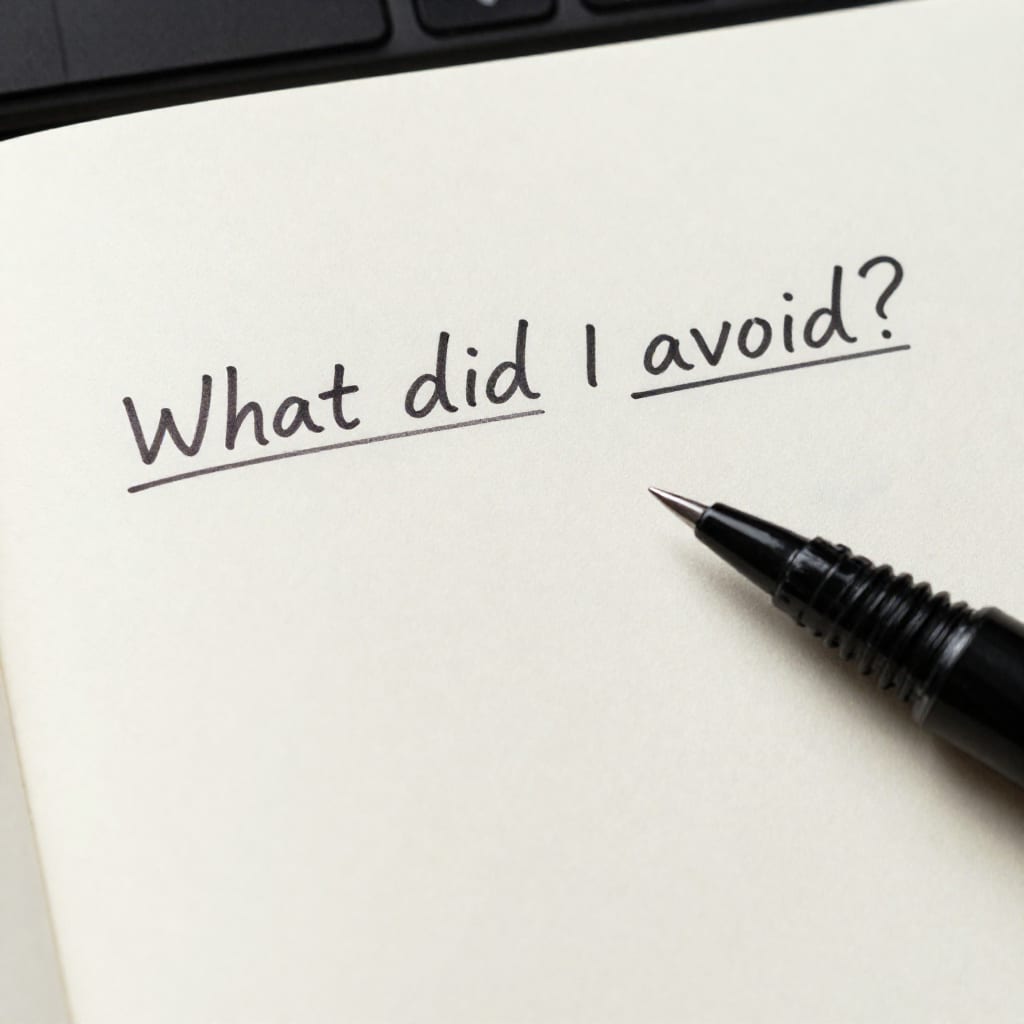
Prompt #3: The ‘What Did I Avoid?’ Question That Uncovered My Patterns
This prompt is uncomfortable—and that’s why it’s powerful. I first encountered it in a book about procrastination: “What task, conversation, or decision did I avoid this week, and why?” The first time I answered, I wrote, “I avoided starting the quarterly report because I was afraid it wouldn’t be perfect.” That one sentence revealed a pattern I’d been blind to for years: perfectionism disguised as preparation.
Over the next few months, this prompt exposed my avoidance habits: I avoided difficult conversations with a team member because I feared conflict. I avoided updating my resume because it meant admitting I might want to leave my job. Each answer was uncomfortable, but it gave me a clear action item for the next week. Instead of vague guilt, I had a specific behavior to address.
This prompt works best when you pair it with a follow-up: “What’s one small step I can take toward that avoided task next week?” It turns avoidance into a concrete experiment. I’ve used it to finally have that awkward conversation, to start a side project I’d been postponing for months, and to stop lying to myself about why I wasn’t doing things.
Prompt #4: The ‘Energy Audit’ That Reshaped My Schedule
I used to plan my week based on deadlines and obligations, ignoring how I actually felt at different times of day. The result: I’d schedule creative work at 3 PM, hit a wall by 4, and feel guilty for not being productive. Then I started a prompt I call the “Energy Audit”: “When did I feel most energized this week? When did I feel drained? What was I doing in each moment?”
After three weeks of tracking, I noticed a clear pattern: my peak energy was between 7 AM and 10 AM, and my worst slump hit around 2 PM. So I shifted my deep work to morning and moved meetings to the afternoon. I also started taking a 10-minute walk during my 2 PM slump. The result? My weekly output increased by about 30%, and I stopped feeling guilty about low-energy afternoons.
The trick is to be specific. Don’t just write “afternoons are bad.” Note what you were doing, who you were with, and what you ate beforehand. Patterns emerge that you can actually act on. For example, I discovered that back-to-back Zoom calls drained me more than any single task. Now I block 15-minute gaps between calls—and it’s been a game-changer for my energy.
This prompt is the best journaling prompt for reviewing your week if you want to optimize your schedule without burning out.
Prompt #5: The ‘One Thing I’d Do Differently’ That Turned Regret Into Growth
Regret is sticky. It can loop in your head for days, poisoning your mood and your next decisions. I used to beat myself up over mistakes—until I found a prompt that reframes regret as data: “If I could redo one moment this week, what would I do differently, and what would I learn from it?”
The first time I used it, I wrote about a team meeting where I’d interrupted a colleague. Redoing it, I’d listen first. The learning: I interrupt when I feel anxious about being heard. That insight led me to practice active listening techniques. The prompt doesn’t erase the mistake, but it transforms it into a lesson you carry forward. Over time, I stopped fearing mistakes and started seeing them as tuition for growth.
This prompt requires self-compassion. You’re not punishing yourself; you’re editing your future. I’ve used it to improve my parenting, my work relationships, and my own habits. It’s the closing loop that makes a weekly review feel complete—like you’ve cleaned the slate for next week.

How to Build a Weekly Review Practice That Sticks
These five prompts work best as a system, but you don’t need to answer all of them every week. Start with two or three that resonate most. I recommend a 10-15 minute session at the same time each week—Sunday evening works for me, but choose what fits. Handwriting deepens reflection, but a digital journal is fine if it’s more convenient. The key is consistency, not perfection.
Here’s a quick checklist to make it stick:
- Set a timer: 12 minutes max. If you finish early, stop. If you’re mid-thought, give yourself one more minute.
- Keep it private: Don’t worry about grammar or coherence. This is for you.
- Rotate prompts: Use the same prompt for a month, then switch. You’ll see patterns deepen.
- Review past entries: Every few months, flip back. You’ll see how far you’ve come.
If you feel stuck or have no answer to a prompt, write “I don’t know yet.” The act of noticing the block is valuable data. Over time, you’ll find that these five prompts become a reliable compass for your week—cutting through noise, building confidence, and turning regret into growth. I’ve used them for over two years now, and I can honestly say they’ve changed how I show up in my life. Give them a try for four weeks, and see what shifts.
Frequently Asked Questions
How long should each weekly review journaling session take?
Aim for 10-15 minutes; quality matters more than length. Start small to build the habit.
Can I use these prompts in a digital journal or do they need to be handwritten?
Either works—handwriting may deepen reflection, but digital is fine for convenience. The key is consistency.
What if I feel stuck on a prompt or don't have an answer?
Skip it or write 'I don't know yet.' The act of noticing the block is itself valuable data.
Should I answer all five prompts every week?
Start with 2-3 that resonate most; rotate in others as you go. Overloading can kill the habit.
How do I know these prompts are actually working for me?
Track small shifts: better sleep, fewer loops of worry, clearer next steps. Progress signals are personal.